Discover a comprehensive guide to quarter errors by year, often available as a printable PDF list, aiding in identifying potentially valuable and rare coins for collectors.
What are Quarter Errors?
Quarter errors aren’t intentional design variations; they’re unexpected mistakes occurring during the minting process. These defects can range from die issues – like cracks or clashes – to planchet problems, such as clipped or blank planchets. Striking errors, including off-center or double strikes, also contribute.
A printable list of quarter errors by year helps identify these anomalies. These lists detail specific errors for each year, aiding collectors in recognizing coins worth more than face value. Understanding these errors is key to successful error coin collecting, turning everyday change into potential treasures.
Why Collect Quarter Errors?
Collecting quarter errors offers a unique numismatic pursuit, differing from standard coin collecting. Error coins represent rarity due to their unintentional creation, often commanding premiums over face value. A printable list of quarter errors by year is invaluable, guiding collectors to identify potentially valuable finds within circulation or purchases.
The thrill of the hunt, combined with the potential for financial gain, fuels this hobby. Some errors, like the Sacagawea dollar/Washington quarter mule, are exceptionally rare and valuable. Utilizing error lists transforms casual coin examination into a focused, rewarding experience.

Understanding Quarter Errors by Type
Categorizing errors – die, planchet, and striking – is crucial; a printable list by year helps identify these variations and understand their minting origins.
Die Errors
Die errors occur during the creation of the coin’s die itself, impacting all coins struck with that die. A printable quarter error list, categorized by year, is invaluable for recognizing these. Die cracks, for example, appear as raised lines on the coin. Die clashes result from the die colliding with another, leaving impressions on the coin’s surface. Die rotation happens when the die isn’t properly aligned, causing a tilted image. Identifying these requires careful comparison to known examples, and a detailed PDF list assists in this process, noting specific years and varieties prone to each error type, enhancing collector accuracy.
Die Cracks
Die cracks are among the most common die errors found on quarters, and a printable error list by year will highlight specific instances. These appear as raised lines on the coin’s surface, originating from fractures in the die. The list details which years and mint marks are more susceptible. Cracks can be radial, extending from the center, or rim-to-rim. A good PDF resource will show images for comparison. Identifying die cracks requires careful observation, and the list aids in distinguishing them from other surface anomalies, improving accurate error detection.
Die Clash
Die clash errors occur when the obverse and reverse dies collide during the minting process, transferring design elements onto the opposite face of the quarter. A printable quarter error list by year will often note instances where die clash is prevalent. These errors manifest as faint impressions of the design on areas where they shouldn’t be. The PDF guides will illustrate how to identify these subtle details. Examining the fields and rims is crucial; a detailed list helps pinpoint specific years with documented clashes, aiding collectors in their search.
Die Rotation
Die rotation happens when the dies aren’t properly aligned during striking, causing the coin’s design to be tilted relative to the coin’s edge. A printable list of quarter errors by year is invaluable for identifying years prone to this issue. PDF guides often detail the degree of rotation expected for specific errors. Collectors use these lists to accurately assess potential finds. Examining the alignment of lettering and design elements is key; a rotated die will result in a noticeable tilt, documented within comprehensive error lists.
Planchet Errors
Planchet errors occur before the striking process, relating to the blank metal disc itself. A printable list of quarter errors by year specifically highlights years with documented planchet issues. These lists categorize errors like blank planchets (missing design), clipped planchets (irregular shape), and rolled rim errors. PDF guides often include images for comparison. Identifying these requires careful examination of the coin’s shape and weight. Error lists help collectors understand the frequency and potential value of each planchet variation, streamlining the identification process.
Blank Planchet Errors
Blank planchet errors represent a significant anomaly – a coin struck without a planchet receiving an impression. A printable list of quarter errors by year will detail instances where this occurred, though they are exceptionally rare. These errors are often identified by a completely smooth, featureless quarter. PDF guides dedicated to error coins frequently showcase images of genuine blank planchets; Collectors utilizing these lists should verify authenticity, as counterfeits exist. Value is substantial due to rarity, making accurate identification crucial when consulting a detailed error list.
Clipped Planchet Errors
Clipped planchet errors occur when a portion of the metal blank is missing before the striking process. A printable list of quarter errors by year will categorize these by the amount of missing metal – straight clips, curved clips, and splinter clips. These lists often include images for comparison. Identifying clipped planchets requires careful examination of the coin’s edge. PDF guides highlight that the missing section impacts the design’s completeness. Value varies based on the severity of the clip; detailed error lists aid in assessing potential worth.
Rolled Rim Errors
Rolled rim errors happen when the planchet’s edge folds over onto itself during the striking process, creating an uneven or thickened rim. A printable list of quarter errors by year will often detail the severity of the roll, classifying them as minor or significant. These lists frequently include visual aids for accurate identification. PDF guides emphasize that this error is caused by excessive pressure during the upsetting process. The value of a rolled rim quarter depends on the extent of the deformation, as detailed in comprehensive error checklists.
Striking Errors
Striking errors occur when the coin isn’t properly aligned or receives an incorrect amount of pressure during the minting process. A printable list of quarter errors by year categorizes these, including off-center strikes, double strikes, and multiple strikes. PDF guides often feature images illustrating the degree of misalignment or duplication. These lists help collectors identify variations, noting that off-center strikes are common, while multiple strikes are rarer. Understanding these errors, as detailed in downloadable checklists, is crucial for assessing a quarter’s potential value and authenticity.
Off-Center Strikes
Off-center strikes, frequently detailed in a printable list of quarter errors by year PDF, happen when the planchet isn’t centered within the striking chamber. This results in a portion of the design missing from the coin’s surface. These errors are relatively common, but value increases with the percentage of the design remaining. Downloadable guides often categorize severity, showing examples of slight to severe off-centering. Collectors use these lists to quickly identify potential finds, understanding that a well-defined, though off-center, design is more desirable.
Double Strikes
Double strikes, meticulously documented within a printable list of quarter errors by year PDF, occur when the hammer die impacts the coin more than once during the striking process. This results in a doubled image, often appearing blurry or slightly offset from the original design. Error lists categorize these by the clarity and extent of the doubling. Identifying genuine double strikes requires careful examination, as machine doubling can be mistaken for this error. A comprehensive PDF guide assists collectors in differentiating between the two, enhancing their ability to assess value.
Multiple Strikes
Multiple strikes, detailed within a printable list of quarter errors by year PDF, represent instances where a coin is struck by the dies more than twice. This often leads to severely distorted images, overlapping designs, and a generally misaligned appearance. Error lists categorize these based on the number of strikes and the degree of distortion. Identifying these errors requires careful comparison to known, properly struck examples. A downloadable PDF guide provides visual references and descriptions, aiding collectors in accurately identifying and valuing these dramatically altered quarters.

Key Quarter Errors by Year (1999-2008 ⏤ State Quarters)
State quarters (1999-2008) feature notable errors, documented in printable lists by year, including doubled dies and off-center strikes, increasing their collectible value.
1999 State Quarter Errors
The 1999 State Quarter program saw several notable errors, detailed within printable error lists categorized by state and year. North Carolina’s double die obverse is highly sought after, showing a distinct doubling of the design elements. South Carolina quarters occasionally present significant off-center strikes, where the design is displaced from the coin’s center. These errors increase a quarter’s value substantially, making a detailed PDF list invaluable for collectors seeking these unique variations.
North Carolina Double Die Obverse
The 1999 North Carolina State Quarter exhibits a prominent double die obverse error, frequently documented on printable quarter error lists. This error manifests as a doubling of Liberty and the date, creating a shadow-like effect. PDF guides highlight that the severity of the doubling varies, impacting the coin’s value. Collectors utilize these lists to identify genuine examples, distinguishing them from altered coins or minor die variations. Proper identification requires careful examination and comparison to listed examples.
South Carolina Off-Center Strike
Printable quarter error lists often feature the 1999 South Carolina State Quarter with an off-center strike. This occurs when the planchet isn’t properly seated in the collar during striking, resulting in a design that’s shifted to one side. PDF guides show varying degrees of off-center strikes, from slight misalignments to significant portions of the design missing. Value depends on how much of the design remains and the overall condition, making accurate identification crucial for collectors.
2000 State Quarter Errors
Detailed printable lists of quarter errors highlight the 2000 State Quarters, specifically noting New Hampshire planchet errors and Virginia die cracks. PDF guides assist collectors in identifying these anomalies. Planchet errors involve defects in the metal blank, while die cracks appear as raised lines on the coin’s surface. These lists provide visual examples and descriptions to aid in accurate identification, helping enthusiasts determine potential value and rarity.

New Hampshire Planchet Error
Printable quarter error lists detail the New Hampshire planchet errors found in 2000 State Quarters. These errors occur during the blank planchet’s creation, resulting in defects like thin or thick planchets, or those with clipped edges. PDF guides show images for comparison, helping collectors identify these subtle variations. Understanding planchet errors is crucial for determining a coin’s value, as they represent a significant deviation from the normal minting process.
Virginia Die Crack
Printable quarter error lists highlight the Virginia die crack errors observed in 2000 State Quarters. Die cracks form when tiny fractures develop on the die surface during use, creating raised lines on the coin. PDF guides provide clear visuals to assist collectors in recognizing these cracks, often found on the obverse or reverse. Identifying die cracks requires careful examination, and their location and severity can impact a coin’s collectibility.
2004 State Quarter Errors
Detailed printable lists of quarter errors specifically focus on the 2004 State Quarters, particularly the Wisconsin doubled die variety. PDF guides showcase images and descriptions to help collectors identify this notable error. These lists often include information on other potential errors found within the 2004 series, such as die cracks or planchet issues. Utilizing these resources is crucial for accurately assessing the value and rarity of your finds.
Wisconsin Doubled Die
Printable quarter error lists highlight the 2004 Wisconsin doubled die as a significant find. PDF guides detail how to identify this error, looking for doubling in the inscriptions and design elements. Collectors use these lists to compare their coins against known examples, assessing the severity of the doubling. Value depends on the degree of the error and coin condition. Accurate identification requires careful examination, aided by detailed images in the downloadable resources.

Key Quarter Errors by Year (Pre-1999 ⸺ Washington Quarters)
PDF quarter error lists focus on pre-1999 Washington quarters, highlighting rare varieties like the 1932-D and 1932-S double die obverse.
1932-D & 1932-S Washington Quarters
Printable quarter error lists specifically detail the highly sought-after 1932-D and 1932-S Washington quarters, known for their prominent double die obverse errors. These errors result from a poorly made die, causing a doubling of Liberty’s features. PDF guides help identify genuine examples, distinguishing them from worn coins. Values can vary significantly based on condition and clarity of the doubling, making accurate identification crucial for collectors. Lists often include images for comparison and authentication.
Double Die Obverse
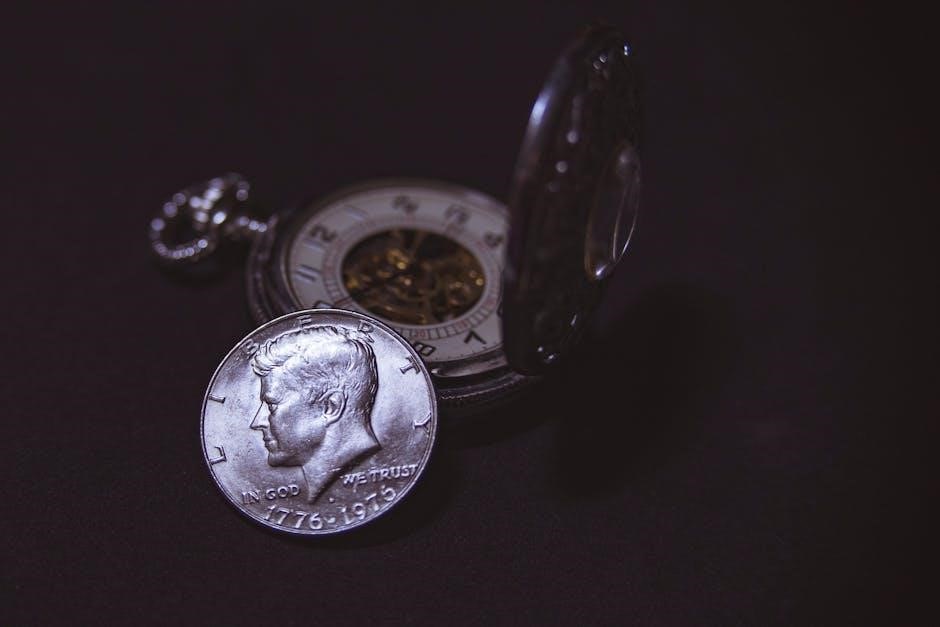
Printable quarter error lists highlight the “Double Die Obverse” (DDO) as a significant variety, featuring a doubling of the design elements on the coin’s face. PDF guides showcase examples, helping collectors identify the distinct doubling in Liberty’s portrait and inscriptions. Lists detail which years and mint marks exhibit this error, like the famous 1932-D and 1932-S. Accurate identification requires careful examination, and lists often provide comparison images to aid in authentication and valuation.
1942-D Washington Quarter
Printable quarter error lists specifically note the 1942-D Washington Quarter’s “Over Horizontal” error. PDF guides detail how a re-punched date displays a horizontal line over the original digit. Collectors utilize these lists to verify the authenticity of this variety, comparing their coins to images provided in the downloadable resources. Identifying this error requires close inspection, and lists offer valuable reference points for determining its presence and potential value.
Over Horizontal Error
Printable quarter error lists highlight the 1942-D Washington Quarter’s “Over Horizontal” error as a key variety. PDF guides illustrate how the date was re-punched during minting, resulting in a distinct horizontal line appearing above the original numeral. Collectors rely on these lists for accurate identification, comparing their coins to reference images. Determining authenticity requires careful examination, and downloadable resources provide essential details for successful error detection.
1955 Washington Quarter
Printable quarter error lists specifically detail the 1955 Washington Quarter’s notorious “Double Die Obverse.” PDF guides showcase how a misaligned die created a doubling effect on Washington’s portrait and liberty inscription. Collectors use these resources to verify authenticity, comparing details to certified examples. Identifying this error requires close inspection, and downloadable lists offer magnified images for accurate assessment, helping enthusiasts locate this highly sought-after variety.
Printable quarter error lists highlight the “Double Die Obverse” as a significant variety, occurring when a die is improperly hubbed. PDF guides demonstrate how this creates a shadow-like doubling of design elements, particularly on Washington’s portrait. Collectors rely on these lists to confirm authenticity, comparing coins to known examples. Detailed images in downloadable resources aid in identifying the subtle doubling, distinguishing it from machine doubling or other alterations.

Modern Commemorative Quarter Errors (2022-Present)
Recent printable PDF lists detail errors on 2020 American Samoa and 2021 Maya Angelou quarters, including die chips and unique design flaws.
2020 American Samoa Quarter Errors
The 2020 American Samoa quarter presents notable errors, frequently documented in printable lists for collectors. The most famous is the “Faceless Bat” error, occurring when debris or grease obstructed the die, leaving the bat on the reverse design incomplete or entirely absent. These errors significantly increase a quarter’s value. Printable PDF guides help identify this specific flaw, alongside other potential anomalies. Collectors actively seek these variations, making detailed error lists invaluable resources. Identifying these errors requires careful examination, and downloadable lists provide a convenient reference for verifying finds and understanding their potential worth within the numismatic community.
Faceless Bat Error

The “Faceless Bat” error on 2020 American Samoa quarters is a highly sought-after variety, detailed in many printable error lists. This occurs due to obstructions – often grease or debris – between the die and the planchet during striking. This results in a missing or severely incomplete bat design on the quarter’s reverse. Printable PDF guides specifically highlight this error, aiding collectors in identification. Its rarity drives significant value, making accurate identification crucial. Collectors rely on these lists to confirm authenticity and assess potential worth, showcasing the importance of detailed error documentation.
2021 Maya Angelou Quarter Errors
Printable quarter error lists frequently document “Die Chip” errors found on 2021 Maya Angelou quarters. These chips, small pieces broken from the die, create raised imperfections on the coin’s surface, often appearing within Angelou’s portrait or the surrounding lettering. Detailed PDF guides assist collectors in recognizing these subtle yet significant flaws. Identifying these errors requires careful examination, and lists provide visual references. The value of these quarters depends on the chip’s size and location, making accurate documentation from printable resources essential for collectors and potential sales.
Die Chip Errors
Printable quarter error lists highlight “Die Chip” errors as common finds, particularly on modern commemorative issues. These occur when small pieces of the die break off during striking, leaving raised marks on the coin. PDF guides often include images illustrating typical chip locations and appearances. Collectors utilize these lists to accurately identify and categorize these errors; While generally not extremely valuable, noticeable die chips can increase a quarter’s collectible worth. Detailed lists aid in distinguishing genuine errors from post-mint damage, crucial for accurate assessment and potential trading.
Resources for Printable Quarter Error Lists
CoinHub and other numismatic websites offer free, downloadable PDF guides detailing quarter errors by year, helping enthusiasts identify valuable coins easily.
Where to Download PDF Lists
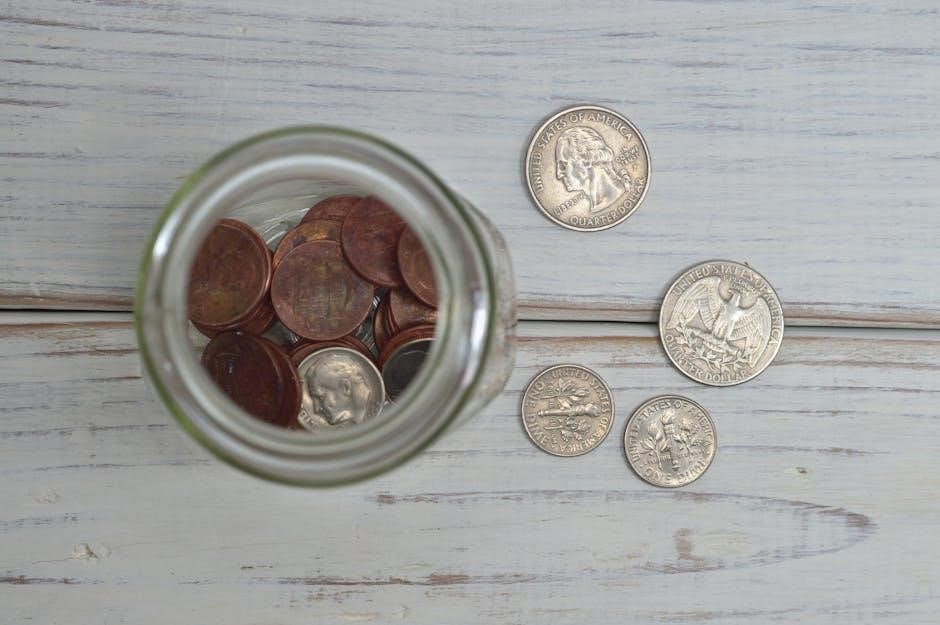
Numerous online resources provide printable PDF lists of quarter errors categorized by year. CoinHub is frequently mentioned as a reliable source, offering detailed guides for state quarters (1999-2008), Washington quarters (pre-1999), and modern commemorative issues (2022-present).
Additionally, various coin collecting forums and websites often compile and share such lists, sometimes created by experienced error coin collectors. A quick internet search for “quarter error list PDF” will yield many results. Remember to verify the source’s credibility before relying on the information provided, as accuracy can vary.
Using Error Lists Effectively
A printable quarter error list, organized by year, serves as an invaluable tool for coin enthusiasts. Begin by carefully researching and downloading a reputable PDF list to aid in identifying potentially rare and valuable coins. Utilize the list to systematically examine your quarter collection, comparing each coin against the documented errors.
Maintain organization by tracking your findings and noting any discrepancies. Remember that error lists are not exhaustive; new errors are discovered regularly. Combine list usage with further research to confirm authenticity and value before making any decisions.
Advanced Quarter Error Identification
Beyond printable lists, grading and determining value require expertise; lists are a starting point, but professional assessment is crucial for accurate evaluations.
Grading Quarter Errors
While a printable list of quarter errors by year helps identify potential valuables, accurately grading them is essential for determining worth. Grading assesses the coin’s condition, considering wear, scratches, and luster. Services like PCGS and NGC offer professional grading, providing an objective assessment.
Understanding grading scales – from Poor to Mint State – is vital. Errors impacting design or strike can increase value, even with circulated wear. A detailed list highlights errors, but expert evaluation confirms authenticity and grade, impacting market price significantly.
Determining Value
Utilizing a printable list of quarter errors by year is a starting point, but determining actual value requires further research. Rarity, condition (grading), and demand all influence price. Completed auction results on platforms like eBay and Heritage Auctions provide real-world data.
Consider professional appraisals for significant finds. Error coins, like the Sacagawea/Washington mule, can fetch tens of thousands. However, many errors have modest value. Thorough research and expert opinion are crucial for accurate valuation.